
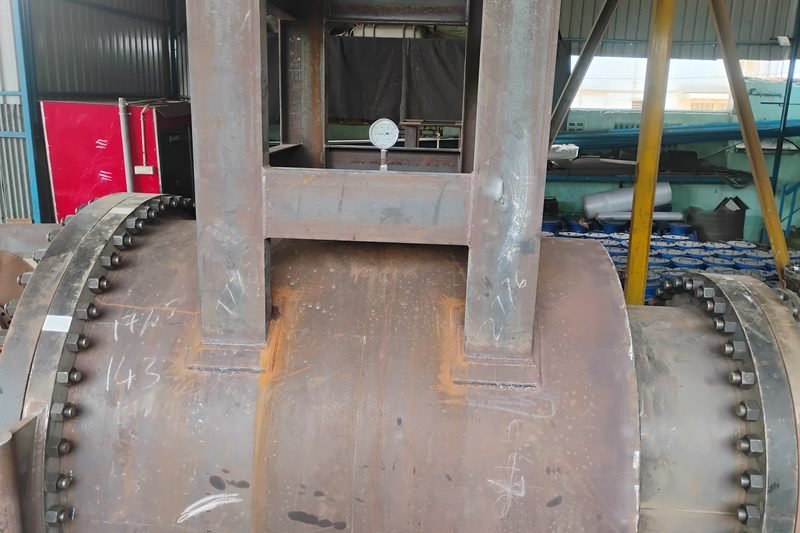
 Machining
Machining
Seats and sealing faces machined to tolerance, because a strainer that will not seal is a leak with a nameplate. Castings machined against jigs and fixtures prepared to the production schedule.
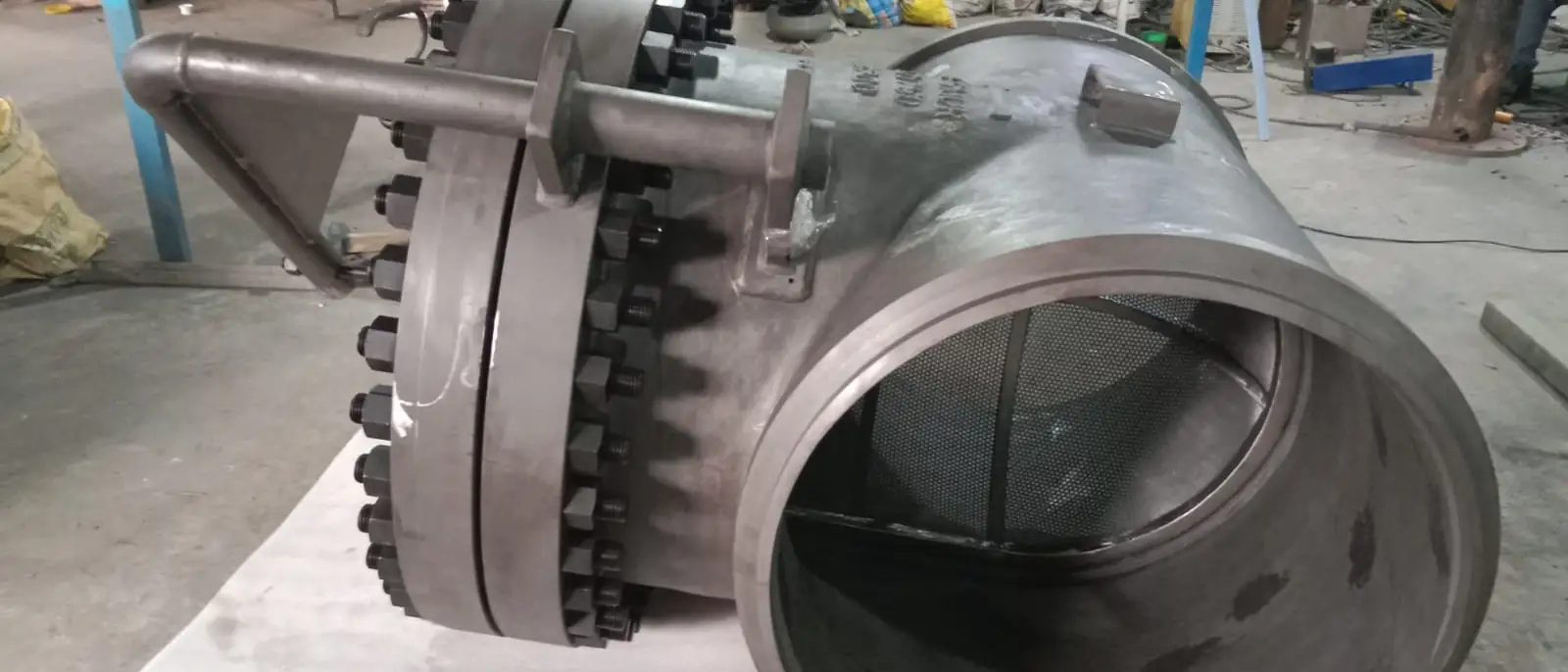
Manufacturing facility
Planning, drawing release, machining, welding, assembly, inspection, finishing and despatch, in one sequence under one roof. Your inspector is welcome on any working day.
The difference it makes
Plenty of companies in this market will quote your enquiry. Fewer will be the ones holding the grinder when a weld gets rejected. That distinction only shows up at the point where something goes wrong — which is exactly when it matters.
Because production, quality and dispatch sit in the same building, a non-conformance raised on Monday is usually corrected the same week. There is no sub-contractor queue, no three-way conversation about whose fault it was, and no shipping the part across the country to be reworked.

Manufacturing process flow
This is the sequence every item follows through the works. It is the same flow chart that appears in our company profile, and the same one an auditor will be walked through.
Product realisation plan and traveller received from planning; an internal production plan and machining schedule is built.
Drawings collected from the drawing department, and tools, jigs and fixtures made ready against the schedule.
Castings received from stores and machined, with dimensional and visual checking by the line inspector in process.
Drilling, welding where required, and assembly of the completed item ahead of inspection.
Final inspection and testing against the specification before anything is released to finishing.
Draining, cleaning and lubrication, then marking, painting and documented despatch with test records.
Shop capability
Machining
Seats and sealing faces machined to tolerance, because a strainer that will not seal is a leak with a nameplate. Castings machined against jigs and fixtures prepared to the production schedule.
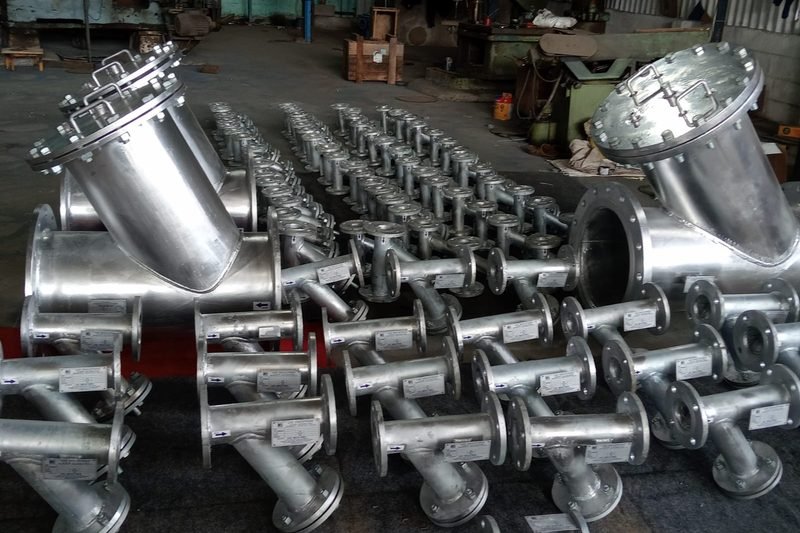 Fabrication
Welded fabrication by qualified personnel in controlled shop conditions — the same capability that produces our pipe spools, skids and structural steel. Fit-up, weld and dimensional checks throughout.
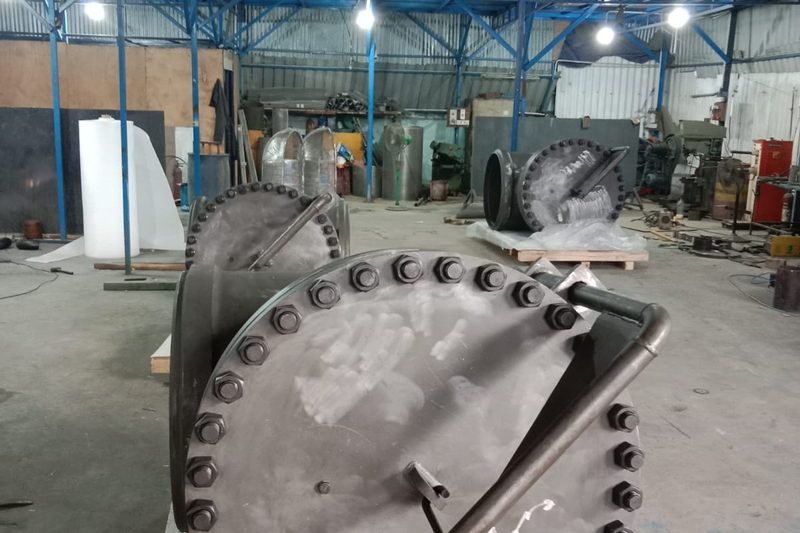 Heavy work
Bodies and covers up to the largest sizes in our range, with davit lifting devices and hinged or clamped covers engineered so heavy lids can be removed safely in service.
 Testing
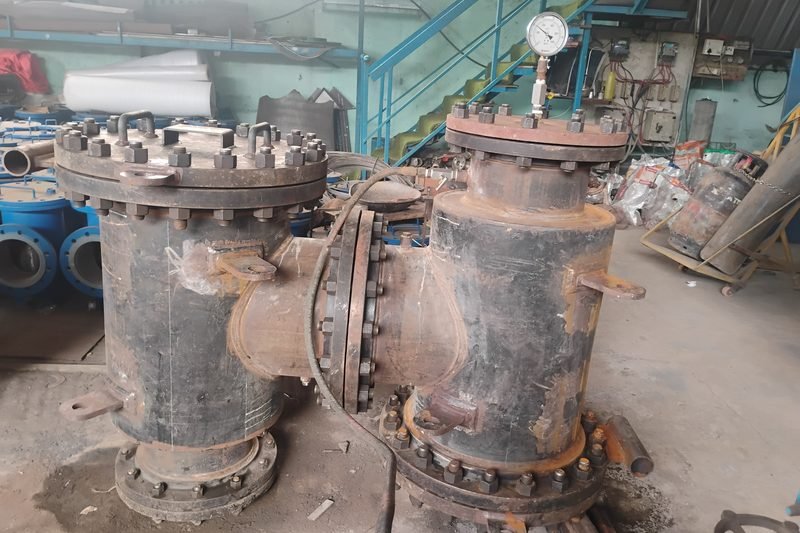
Hydrostatic testing, radiographic testing, PMI and NDT as the specification requires, plus factory acceptance testing on skid packages covering electrical checks and instrumentation calibration.
 Finishing
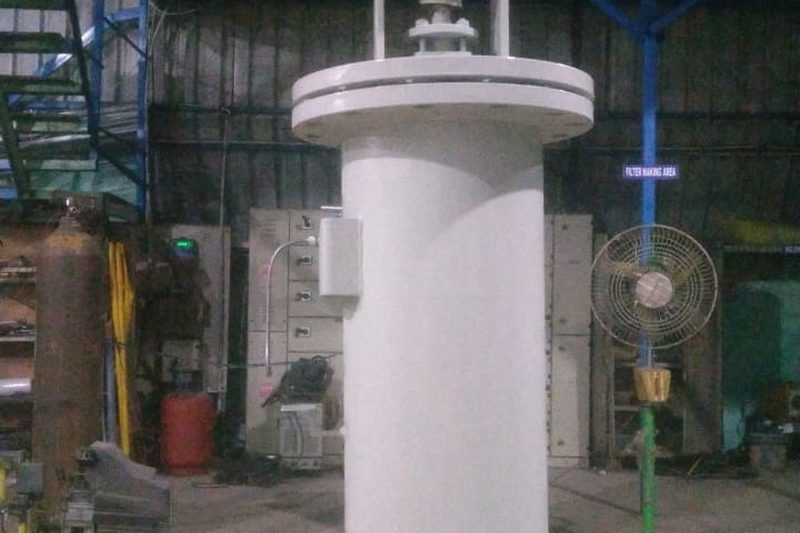
All cast iron and carbon steel units epoxy painted to resist rust; ductile iron valve bodies epoxy powder coated inside and out. Threaded and socket weld ends given hex ends for easy installation.
 Despatch
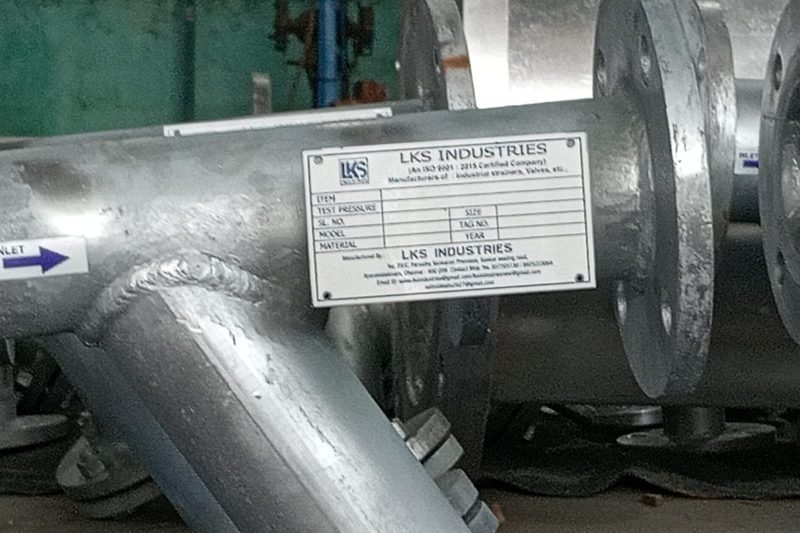
Every item nameplated and marked, with test records travelling alongside. For structural scope, the same organisation continues to site for erection, alignment and handover with records.

Engineering & R&D
Part of the staff within our technical department is dedicated to research and development. That is what allows improvements and brand-new products to enter the range on a regular basis instead of the catalogue standing still for a decade.
It is also what makes our special engineering division possible — strainers designed for applications where no standard product fits, engineered against your process conditions rather than adapted from something close.
Client and consultant inspection is welcome at our shop. If you are assessing us as a vendor, a visit tells you more in an hour than any document will.