
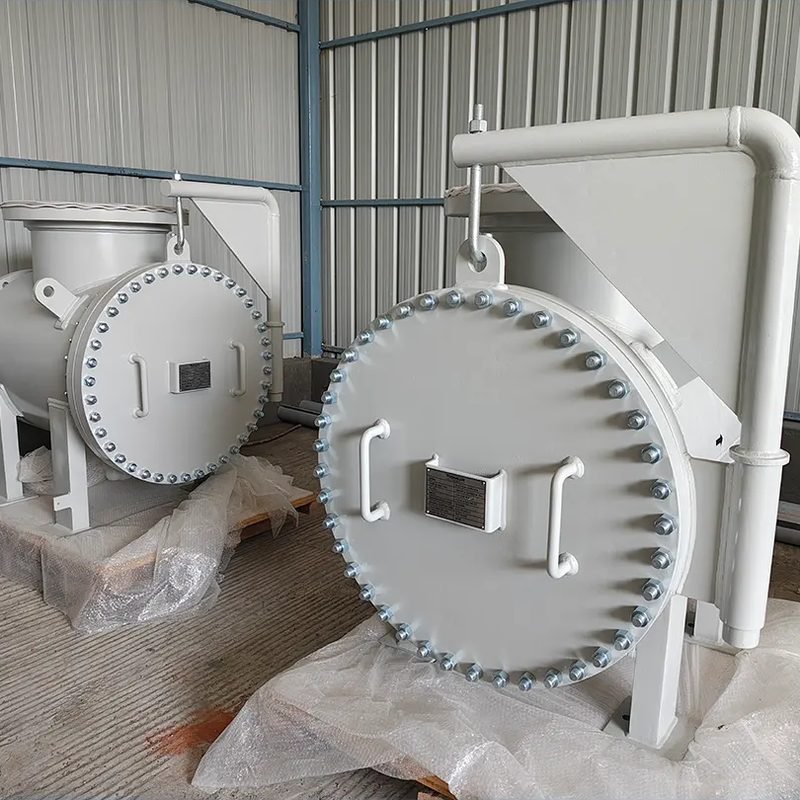
A suction diffuser mounts to the suction side of a pump in either a horizontal or vertical position. It is designed to remove foreign matter that may be hazardous to the pump or other system components, while providing the proper flow conditions to the pump. Where space is limited it can be used as an elbow — in some cases a reducing elbow — with a built-in strainer.
That last sentence is why they get specified. A centrifugal pump wants uniform, non-swirling flow at the impeller eye, which conventionally means several diameters of straight pipe after the last elbow. In a plant room where the pump sits a metre from the wall, that straight run does not exist. The suction diffuser combines the elbow, the flow straightener and the strainer into one fitting.
1. Size it to the pump, not to the pipe
The most common error we see is a diffuser ordered to match the incoming pipe size when the pump suction is a size smaller, or vice versa. The diffuser outlet must match the pump suction flange. The inlet matches the line.
When you send an enquiry, give us both: line size in, pump suction size out. If they differ, the reducing configuration is exactly what the fitting is designed for — but we cannot guess which way round.
2. Free area is the number that matters
A strainer element restricts flow. In a suction diffuser that restriction sits directly upstream of the impeller, in the one part of the system where you have the least pressure to spare.
The relevant figure is the ratio of open area in the element to the cross-sectional area of the pipe. Too little and the clean pressure drop starts eating your NPSH available before any dirt has arrived. As the element loads, that margin shrinks further.
So when you calculate NPSH available, include the diffuser's pressure drop in the dirty condition, not the clean one. If the resulting margin over NPSH required is thin, you have three options: a larger diffuser, a coarser element, or moving the strainer duty upstream to a separate basket strainer where there is pressure to spare.
The suction diffuser is the wrong place to do fine filtration. Its job is to stop the debris that would wreck an impeller — bolts, weld spatter, gasket fragments — not to polish the fluid.
3. The start-up screen must come out
Suction diffusers are commonly supplied with a fine start-up screen fitted over the permanent element, to catch the construction debris that a new system always contains. It is there for commissioning only.
Leave it in and it blinds, sometimes within hours of the system going live. The pump then runs starved, the operator sees low flow, and everybody investigates the pump. We have been called about “a faulty diffuser” more than once and found an intact start-up screen packed solid with pipe scale.
Two habits prevent it: write screen removal into the commissioning checklist as a signed-off item, and fit a differential pressure gauge across the diffuser so the condition is visible rather than inferred.
4. Support the pump, not the diffuser
A suction diffuser full of liquid is heavy, and it is cantilevered off the pump suction flange. On larger sizes that load must not be carried by the pump casing — it will pull the pump out of alignment, and misalignment shortens seal and bearing life long before anything dramatic happens.
Fit a support foot or a pipe support under the diffuser. We can supply the diffuser with a foot arrangement if you tell us the orientation and mounting height at enquiry stage.
5. Orientation and access
The unit can be installed horizontally or vertically, but the element still has to come out. Check that the removal direction is clear of the baseplate, the motor, the coupling guard and anything else that occupies a pump room. This is a five-second check on the GA drawing and a very expensive discovery at site.
What to send with an enquiry
| Line size in | Nominal bore of the incoming suction pipe |
|---|---|
| Pump suction size out | Nominal bore and flange rating of the pump inlet |
| Flow rate | Duty flow, and maximum if different |
| Fluid & temperature | Media, operating temperature, and any solids expected |
| Pressure rating | Class or design pressure |
| Material | Body and element — carbon steel, SS 304 / 316, bronze or as specified |
| Orientation | Horizontal or vertical, and available clearance for element removal |
| Options | Support foot, gauge tappings, start-up screen, blow-off drain |
When something else is the better answer
If the pump has adequate straight run available, a conventional Y-strainer or basket strainer upstream will usually cost less and give you more dirt-holding capacity. The diffuser earns its price when space is the constraint.
If the service is genuinely dirty and continuous, put a duplex strainer upstream so the straining duty can be cleaned without stopping the pump, and let the diffuser handle flow conditioning only.